
SAT brings together medical expertise, automotive engineering and predictive physiological intelligence to support the evolution of driver safety assessment methodologies.
Sleep Advice Technologies (SAT), a deep-tech company specializing in predictive human-state intelligence, has been engaged by Euro NCAP to provide technical and scientific support for experimental activities aimed at advancing the objective assessment of Driver Monitoring Systems (DMS).
The collaboration builds on SAT's distinctive multidisciplinary expertise, combining automotive engineering, neurology and sleep medicine with proprietary algorithms validated against medical-grade physiological measurements.
Towards More Objective Driver Monitoring Assessment
As Driver Monitoring Systems become increasingly important for vehicle safety, assessing their performance under real-world driving conditions presents new challenges. In particular, distinguishing genuine driver impairment from normal driving behaviour is essential to improving detection reliability while minimizing unnecessary warnings.
SAT is contributing to the development and evaluation of an objective assessment methodology combining three complementary sources of evidence:
- Behavioural assessment, using Psychomotor Vigilance Testing (PVT) to evaluate attention and reaction-time performance.
- Subjective assessment, using standardized driver sleepiness questionnaires.
- Continuous physiological assessment, using SAT's proprietary PredictS technology to estimate driver fatigue and drowsiness in real time from non-intrusive biometric measurements.
Through its dedicated EventMarker application, SAT also enables time-synchronized recording of physiological indicators, driver feedback and DMS alerts, supporting systematic analysis of monitoring-system performance.
Supporting Euro NCAP's Experimental Activities
SAT's contribution includes technical support for real-world vehicle testing, data acquisition and analysis, scientific interpretation of results, and potential evolution of future assessment methodologies.
The initiative builds on SAT's extensive validation experience across research laboratories, driving simulators and real-road environments, where its predictive technology has been evaluated against polysomnography (PSG), the medical reference standard for sleep assessment.
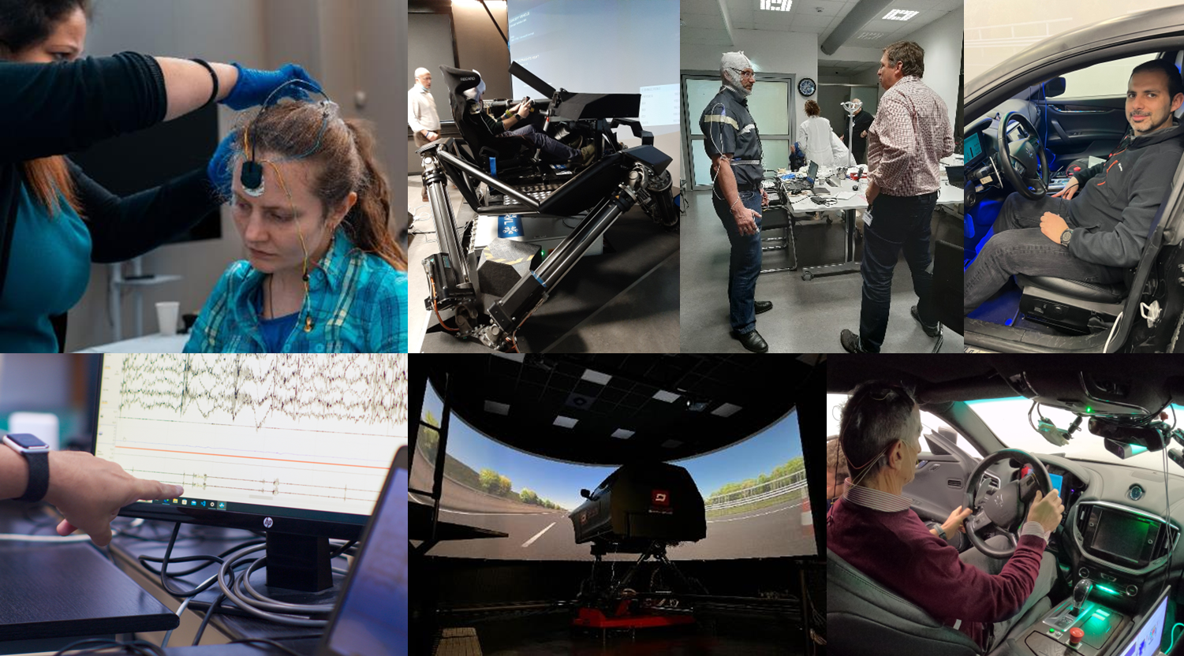
Combining Medical Science and Automotive Engineering
The collaboration highlights the growing importance of combining medical science and automotive engineering to establish more objective, reliable and meaningful assessments of driver safety technologies.
For SAT, it also reinforces the value of its Predictive Intelligence Layer as a technology capable of supporting not only advanced driver monitoring functions but also independent, physiology-based performance assessment.
“We are proud to contribute to Euro NCAP’s efforts to advance objective Driver Monitoring System assessment. This collaboration recognizes SAT’s distinctive ability to combine medical science, automotive engineering and predictive physiological intelligence. By bringing objective measurements of human physiological states into real-world vehicle testing, we aim to support more reliable and meaningful safety assessments, ultimately contributing to safer mobility.”
— Riccardo Groppo, CEO and Co-founder, Sleep Advice Technologies (SAT)
"At Euro NCAP, we're committed to develop suitable assessment methods to determine how robust safety technology is implemented in new vehicles. Driver dowsiness continues being one of the major risk factors and still leading to many road fatalities in Europe, and we need to make sure that every car is equipped with a system that supports the driver when it's most needed. We're excited to validate a future PVT-based drowsiness detection assessment as part of our on-road evaluation, and are fortunate to have the tech and expertise from SAT for ground truth and data processing purposes"
— Adriano Palao, Technical Manager ADAS & AD (Euro NCAP)

